First impressions matter. In a commercial premises, the impression a customer receives involves many elements: lighting, layout, ambient temperature. And temperature is one of the factors that most influences how long someone stays in a shop — even though almost nobody is consciously aware of it.
Underfloor heating has been established in high-end residential properties for decades, but in recent years it has made the definitive leap into the commercial sector. Offices, shops, restaurants, hotels and customer-facing centres across the Valencian Community are adopting it for reasons that go beyond comfort: energy efficiency, design freedom and competitive advantage.
How underfloor heating works
The principle is straightforward: instead of heating the air from an elevated point (as a ceiling-mounted fan coil or a wall radiator would), underfloor heating distributes warmth uniformly from the floor surface upwards.
There are two main variants:
Hydronic underfloor heating
A circuit of cross-linked polyethylene (PEX) pipes is embedded in the screed or a mortar layer. Warm water circulates through these pipes at a low temperature — between 30 and 45 C, compared with the 60-80 C required by conventional radiators. This low operating temperature is precisely what makes the system so efficient.
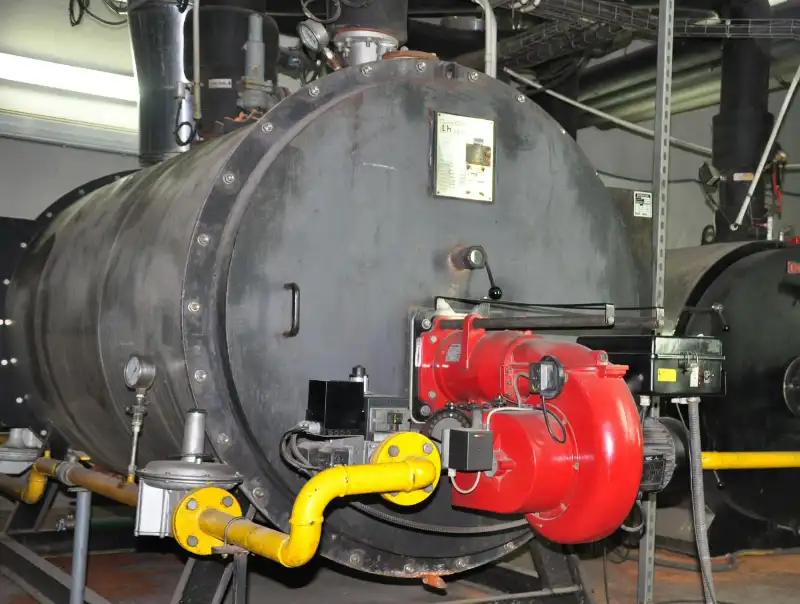
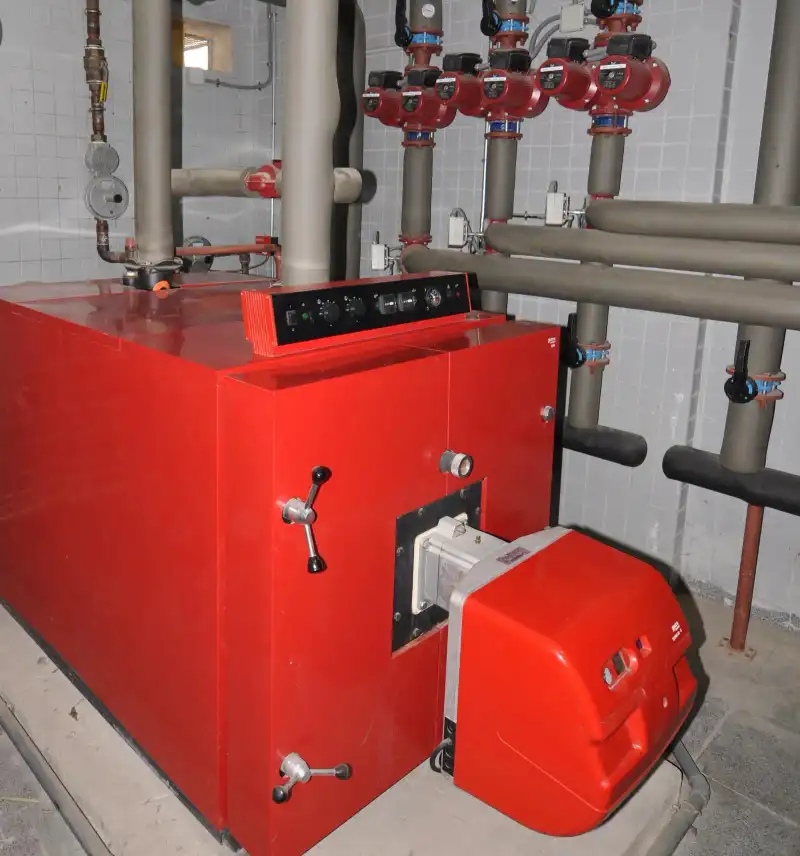
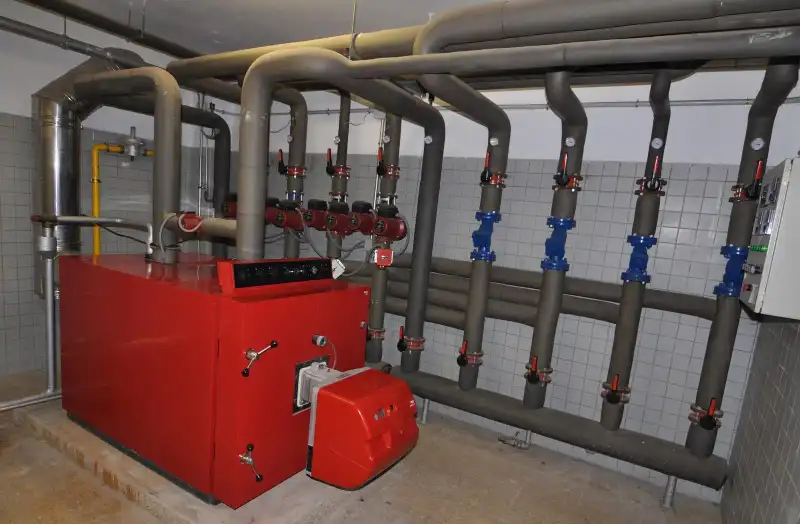
The heat source can be a gas boiler, but maximum performance is achieved when combined with an aerothermal (air-source) heat pump, since these operate within temperature ranges that align perfectly with underfloor heating requirements.
Electric underfloor heating
Uses heating elements or cables installed beneath the floor surface. It is simpler to install during refurbishments or in spaces where major construction work is not possible, but its operating cost is higher than the hydronic variant. It is recommended for small areas or as a supplement in specific zones.
Key advantages in commercial environments
Uniform thermal comfort
Infrared radiation from the floor directly heats surfaces and people, not the air. The result is a more natural and even warmth, with no cold air draughts or temperature gradients (the classic problem of warm head, cold feet).
In premises with double-height ceilings, large glazed areas or high-traffic doors — conditions common in retail — this uniformity has a direct impact on customer and staff well-being.
No visible elements
No radiators interrupting the premises’ lines. No ceiling cassettes limiting lighting or interior design. The system disappears beneath the floor and frees up every wall and ceiling for whatever design the owner envisions.
In sectors where the aesthetics of the space form part of the value proposition — fashion, cosmetics, dining, high-end offices — this is not a minor detail.
Real energy savings
By operating with water at low temperature, hydronic underfloor heating reduces consumption compared with conventional systems. If the heat source is a heat pump, the Coefficient of Performance (COP) can range from 3 to 5, meaning for every kilowatt consumed, between 3 and 5 kilowatts of heat are produced. This translates into bill reductions of 30% to 50% compared with direct electric heating, and 20% to 30% compared with a conventional gas boiler.
Compatible with cooling
The same hydronic circuit can be used to cool the premises in summer if combined with a reversible heat pump and a suitable floor finish (a humidity control system is essential to prevent condensation). In this mode the system acts as radiant floor cooling, although its cooling capacity is more limited than an air-based system.
Reduced maintenance
A properly installed hydronic circuit with correctly treated water has a service life of several decades and requires virtually no maintenance on the buried components. The elements that need periodic inspection are the same as in any heating system: the heat source, the manifolds and the zone valves.
Installation process
The installation of hydronic underfloor heating in a commercial premises follows these stages:
- Study and design: calculation of the premises’ thermal demand, design of the pipe circuits, definition of control zones and selection of the heat source.
- Substrate preparation: levelling the structural slab and laying thermal insulation (mandatory under Spain’s Building Code to prevent downward heat loss).
- Pipe installation: laying the PEX circuits on the insulation, fixed to mesh or rails, at the spacing calculated in the design (typically 10 to 20 cm).
- Pressure test: before covering, a hydraulic test is carried out to verify the leak-tightness of all circuits.
- Screed or self-levelling mortar: the covering layer is poured, which will be the surface on which the final floor finish is installed.
- Floor finish installation: almost any floor covering is compatible (porcelain tiles, natural stone, engineered wood, vinyl), although it is essential to respect the maximum thermal resistance specified by the manufacturer.
- Connection and commissioning: connection to the manifold, heat source and control system. The first heat-up must be carried out gradually to avoid damaging the screed.
The installation timeframe for a medium-sized commercial premises ranges from three to seven days of work, plus screed curing time (21 to 28 days before switching the system on for the first time).
Costs compared with traditional systems
The initial investment in underfloor heating is higher than that of a radiator or fan coil system. However, the full analysis must consider:
- Installation cost: hydronic underfloor heating in a commercial premises can cost between EUR 40 and EUR 70/m2 installed, depending on the system type, the heat source chosen and the premises’ conditions.
- Annual energy saving: depending on the premises’ conditions and electricity tariff, savings can range from EUR 15 to EUR 35/m2 per year in premises with intensive heating use.
- Payback period: in most cases this falls between 4 and 8 years, especially when combined with an aerothermal heat pump and off-peak electricity tariffs.
To these figures must be added the value added in terms of image and comfort, which is difficult to quantify but very real.
Ideal applications in the commercial sector
- Shops and boutiques where the aesthetics of the space are part of the brand.
- Restaurants and cafes with large terraces or open-plan dining rooms.
- Offices and co-working spaces with long daily occupancy.
- Reception and waiting areas in hotels, clinics or professional offices.
- Sports centres and changing rooms, where comfort from floor contact is a priority.
- Premises with high-end floors (marble, large-format porcelain) that act as excellent thermal emitters.
A system that adds value to the property
Beyond daily comfort and bill savings, installing underfloor heating in a commercial premises increases the property’s value and its appeal to future tenants or buyers. In a market where energy efficiency is increasingly a decision criterion — driven by European regulations — having a low-consumption heating system is a tangible asset.
At Acoval we have been designing and installing heating and DHW systems in commercial premises, industrial warehouses and tertiary-use buildings in Valencia and its metropolitan area for years. We study each project from scratch to propose the most efficient solution based on the premises’ use, the building envelope and the owner’s objectives.
If you are planning new construction, a renovation or simply want to know whether underfloor heating is feasible in your premises, get in touch through our contact page. We analyse your case with no obligation and present a proposal with real consumption and payback data.