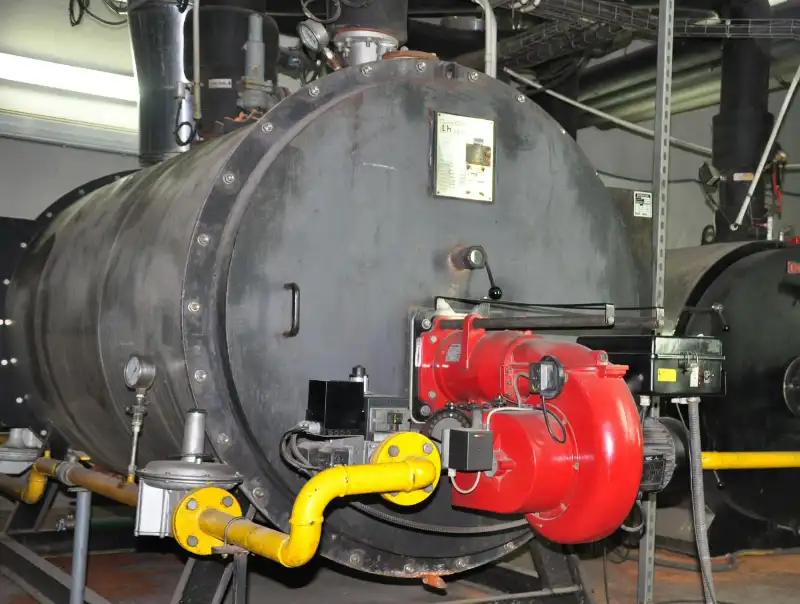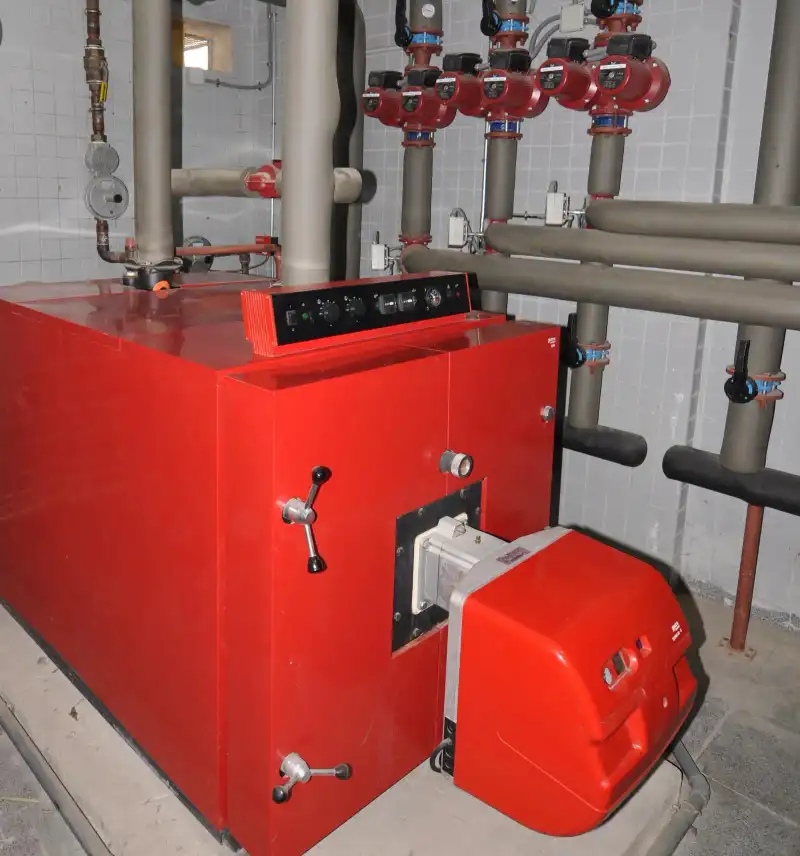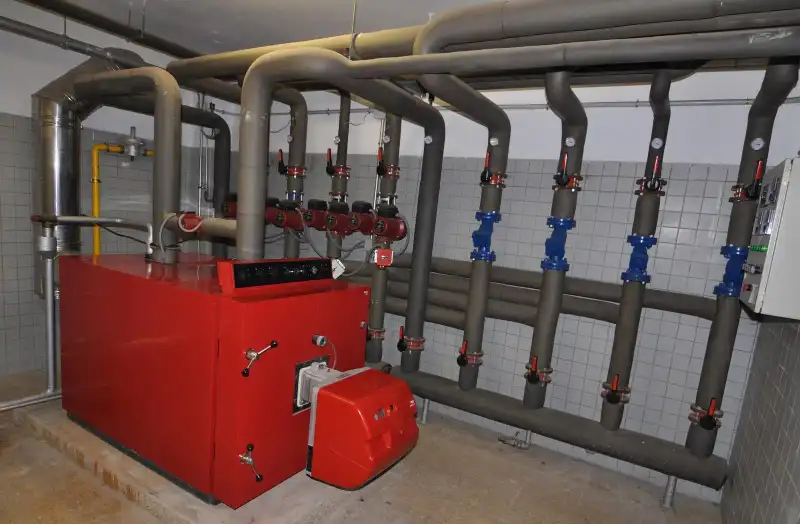
Natural gas was the reference solution for industrial heating and hot water production for decades. Efficient, affordable and based on well-known infrastructure. But the energy landscape has changed substantially: gas prices have demonstrated a volatility that financial directors can no longer ignore, and European regulations are progressively pushing towards the electrification of heat.
In this context, the industrial heat pump has moved from being an alternative option to becoming the preferred solution for many businesses seeking efficiency, autonomy and long-term control over their energy costs.
How a heat pump works
The operating principle of a heat pump is the same as that of a refrigerator, but in reverse. Instead of extracting heat from an enclosed space to cool it, it extracts heat from a cold external source — air, water or the ground — and raises it to a useful temperature for heating or domestic hot water (DHW).
The physical process is based on the vapour compression cycle:
- A liquid refrigerant absorbs heat from the cold source and evaporates.
- The compressor increases the pressure and temperature of the vapour.
- In the condenser, the refrigerant releases that heat to the heating circuit and returns to liquid form.
- The expansion valve reduces the pressure and the cycle repeats.
The key point is that the heat delivered to the building is greater than the electrical energy consumed by the compressor. The difference is provided by the thermal energy extracted from the environment, which is free.
COP: understanding real efficiency
The COP (Coefficient of Performance) is the key indicator for evaluating a heat pump. It is defined as the ratio of heat produced to electrical energy consumed:
COP = Heat produced (kWh) / Electrical energy consumed (kWh)
A heat pump with a COP of 3 produces 3 kWh of heat for every kWh of electricity consumed. A conventional gas boiler has a maximum efficiency of 95-98%, meaning it can never exceed 1 kWh of heat per kWh of fuel.
For the economic comparison between gas and a heat pump, the relevant calculation is the cost per useful kWh of heat, which combines the price per kWh of electricity or per m3 of natural gas with each system’s efficiency.
At current prices (industrial electricity at EUR 0.12-0.15/kWh and gas at EUR 0.06-0.09/kWh), a heat pump with a COP of 3-4 competes directly with a gas boiler on operating cost, and outperforms it when the COP is higher or when combined with photovoltaic self-consumption.
Seasonal COP (SCOP)
The COP varies with outdoor temperature: when it is colder, the external heat source is colder and the COP decreases. That is why the SCOP (Seasonal COP) is used, which averages performance across the entire heating season.
For air-to-water heat pumps in Mediterranean climates such as Valencia and the Valencian Community, the typical SCOP is between 3.0 and 4.5, depending on the model and the supply temperature of the distribution system.
Types of industrial heat pumps
Air-to-water heat pump
This is the most widespread type. It extracts heat from outdoor air and transfers it to the water circuit that feeds the heating terminals (fan coils, underfloor heating, high-temperature radiators).
- Advantages: simpler installation, no need for ground drilling or access to groundwater. Lower installation cost.
- Limitations: COP decreases on very cold days. In extreme continental climates it may require supplementary electric heating. In the Mediterranean climate this limitation is much less significant.
- Typical uses: industrial warehouses, office buildings, hotels, shopping centres.
Water-to-water heat pump
Extracts heat from a water source: groundwater (water-based geothermal), lake or river water, or residual heat from industrial processes.
- Advantages: the source temperature is more stable throughout the year, which allows a high COP to be maintained even in winter. High efficiency in continuous operation.
- Limitations: requires availability of a water source and, in the case of groundwater, administrative permits and prior borehole surveys.
- Typical uses: industries with access to process water, buildings near aquifers, facilities with residual heat management.
Geothermal (ground-to-water) heat pump
Extracts heat from the ground via vertical boreholes or horizontal collectors buried at depths where the soil temperature is stable (8-14 C across most of Spain).
- Advantages: very stable performance throughout the year, independent of outdoor temperature. Long service life of the geothermal heat exchanger (50 years or more).
- Limitations: higher initial investment due to drilling work. Requires sufficient space for collectors or suitable ground for boreholes.
- Typical uses: new-build buildings, installations with high heating demand and stringent efficiency requirements.
High-temperature heat pumps
Conventional heat pumps deliver water at temperatures of 45-55 C, suitable for low-temperature systems (underfloor heating, fan coils). For industrial processes requiring higher temperatures, high-temperature heat pumps are available that can deliver water at 65-90 C, compatible with conventional radiator installations or low to medium-temperature industrial processes.
Sizing: the critical factor
A common mistake in industrial heat pump projects is over-sizing. Installing a capacity far exceeding actual demand causes the pump to operate in short cycles, increasing start/stop frequency, reducing real efficiency and shortening compressor life.
Correct sizing always starts from a thermal load calculation for the building or process: heat losses through the building envelope, air renewal, ventilation, internal loads and occupancy profile. From that calculation the required rated capacity is determined and the most suitable equipment selected.
For industrial installations, it is also important to consider the possibility of operating in reversible mode: if the same heat pump must provide cooling in summer, the sizing must also take refrigeration loads into account.
Integration with existing systems
One of the most common questions when considering a switch from gas boiler to heat pump is: is it compatible with my current installation?
The answer depends on the type of existing distribution system:
- Underfloor heating: ideal for heat pumps, as it operates at supply temperatures of 35-45 C where the COP is at its maximum.
- Fan coils: compatible with most modern heat pumps, especially if the fan coils have a large surface area.
- Conventional radiators: require either oversized radiators (more surface area to work at a lower temperature) or high-temperature heat pumps.
In many refurbishment projects, replacing the boiler with a heat pump is combined with a partial upgrade of the distribution system to optimise performance.
Available grants and incentives
Heat pumps benefit from several support programmes:
- MOVES III programme (and its successors): covers part of the investment in efficient heating equipment, including heat pumps.
- Next Generation EU funds (Recovery Plan): channelled through regional governments for energy rehabilitation and heat electrification in businesses.
- Corporate tax deductions for investments in energy efficiency.
- Energy saving certificates: in some cases, high-efficiency installations can generate tradable certificates.
Combining a heat pump with a photovoltaic self-consumption installation is especially powerful: part of the heat produced is powered by the business’s own solar electricity, further reducing operating costs and the payback period.
The heat pump as a real alternative to gas
At Acoval we design and install industrial heating and DHW systems based on heat pumps for businesses in Valencia and the Valencian Community. Our technical team analyses the real consumption profile of each installation, proposes the most efficient solution and manages the project from design through commissioning and legalisation.
If you have a gas boiler approaching the end of its service life, or if you simply want to analyse how much you could save with an industrial heat pump, contact us. We prepare a technical and financial study using the real figures from your installation.