Climate-controlling a commercial space of any real size with individual split units is a solution that works in small areas but becomes inefficient, expensive and difficult to manage as the space grows. VRF systems — Variable Refrigerant Flow — were created precisely to solve this problem: they offer centralised, flexible and highly efficient climate control for commercial buildings, offices and hotels.
This article explains exactly what a VRF system is, how it works, what real advantages it offers and in which types of installations it is worth considering.
What a VRF system is and how it works
VRF stands for Variable Refrigerant Flow. It is an HVAC technology that uses a single centralised refrigeration system to feed multiple indoor units distributed throughout the building.
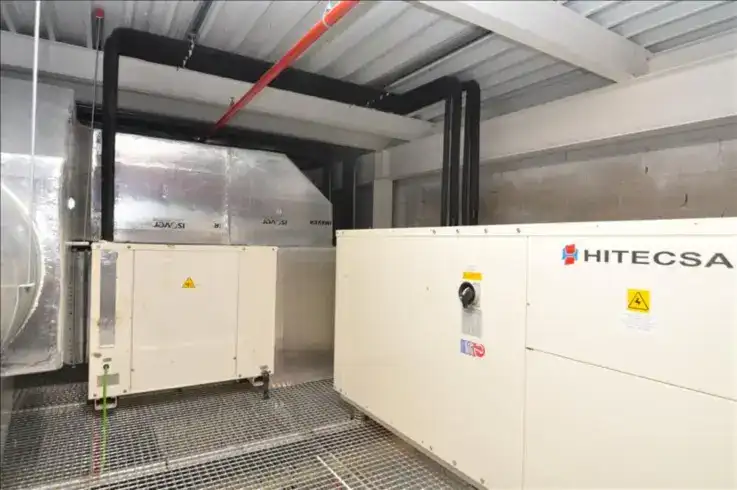
Unlike traditional splits — where each indoor unit has its own outdoor compressor — in a VRF system there is one or a few outdoor units that manage the refrigerant supply to all indoor units through copper piping. The word “variable” refers to the system’s ability to adjust the refrigerant flow to each unit in real time according to each zone’s demand.
The role of the inverter and variable-speed compressor
The heart of a VRF system is its variable-speed inverter compressor. This compressor does not operate in on/off cycles like conventional systems: it adjusts its speed continuously to deliver exactly the output that each moment requires. The result is significantly lower energy consumption and a more stable temperature in every zone.
2-pipe and 3-pipe VRF systems
There are two main configurations:
- 2-pipe system: All indoor units operate in the same mode simultaneously (all cooling or all heating). It is the more economical option and sufficient for most commercial spaces.
- 3-pipe system (heat recovery): Allows different zones to operate in cooling and heating at the same time. The heat extracted from zones being cooled is used to warm those that need it. This configuration achieves outstanding energy efficiencies and is ideal for buildings with diverse uses.
Advantages of VRF over traditional splits
Greater energy efficiency
VRF systems can achieve Coefficient of Performance (COP) values of 4 to 5, meaning that for every kilowatt consumed they produce between 4 and 5 kilowatts of thermal energy. Compared with conventional systems of lower efficiency, the saving on the electricity bill can range from 30% to 50%.
A single outdoor installation for the entire building
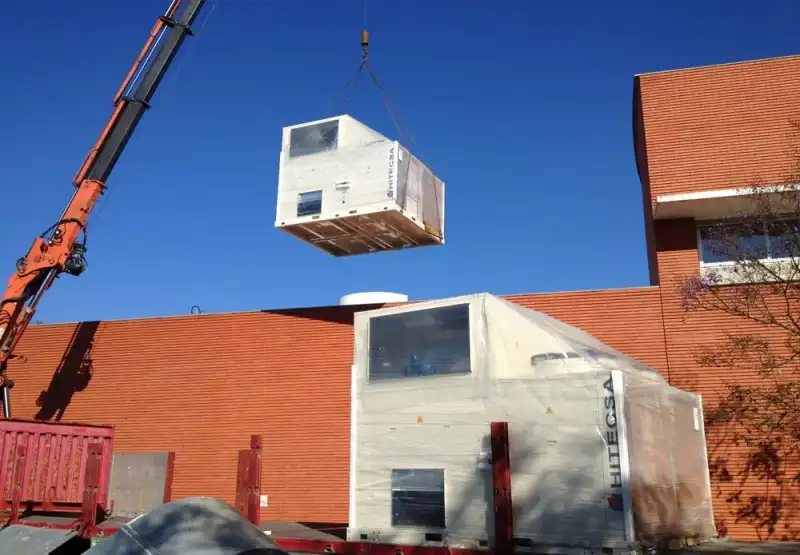
Instead of installing one outdoor unit per zone, VRF consolidates everything into one or a few outdoor units. This reduces visual impact, simplifies maintenance, takes up less space on the roof or facade and facilitates regulatory compliance.
Individualised zone control
Each indoor unit has its own thermostat and controls. Office workers can adjust the temperature in their zone without affecting others. The most advanced systems include centralised management from a tablet or smartphone, with scheduling and real-time consumption monitoring.
Simultaneous heating and cooling
In heat recovery models (3-pipe), it is possible for a meeting room to be in cooling mode while the reception operates in heating mode, all at the same time. In buildings with varied orientations or mixed uses, this delivers very significant energy savings, as the system partially self-supplies from recovered heat.
Cleaner, less invasive installation
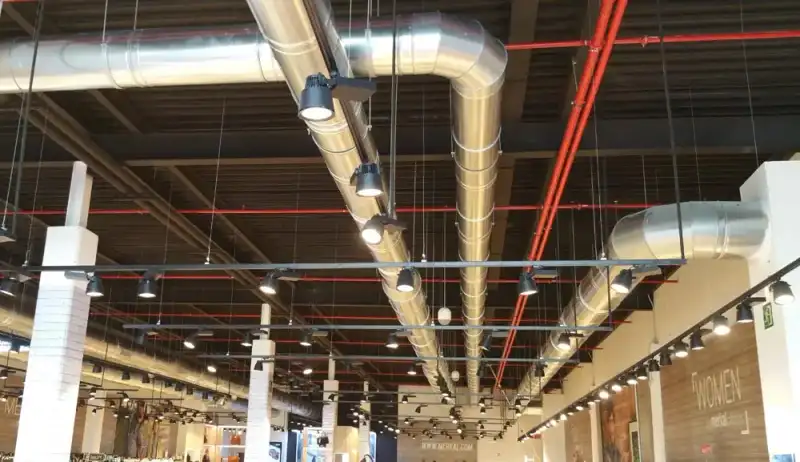
Refrigerant pipes are small in diameter, making them easy to route through false ceilings and tight plant areas. There is no need to install large air ducts, which reduces construction work and installation time.
Long service life and low maintenance
With proper maintenance, a VRF system can operate for 15 to 20 years. By centralising the most critical components in a few outdoor units, inspections are simpler and less frequent than in an installation made up of dozens of independent splits.
How much does a VRF system actually save?
Savings depend on factors such as premises size, usage, operating hours and insulation condition. However, as a reference:
- Compared with conventional splits: 30-40% saving on annual electricity consumption.
- Compared with ducted systems with a central air handler: 20-35% saving thanks to precise zoning.
- In heat recovery systems: the use of residual heat can cut consumption by up to 50% in buildings with simultaneous heating and cooling needs.
The payback on the additional investment compared with a conventional system typically falls between 4 and 7 years for intensive-use commercial installations.
Ideal applications for VRF systems
Offices and co-working spaces
Offices are where VRF delivers its full potential. High-density work areas generating heat, meeting rooms with variable usage, break areas with different needs… The ability to control each space independently and recover heat between zones makes VRF the most efficient solution.
Retail and shopping centres
In a retail unit, the customer-facing area has very different needs from the stockroom or the back offices. A VRF system manages these differences with precision, without wasting energy on zones that do not need it.
Hotels and tourist accommodation
In a hotel, each room can have its own indoor unit controlled by the guest, while the system intelligently manages the whole to maximise efficiency. Additionally, the noise level of VRF indoor units is far superior to that of conventional splits, improving guest comfort.
Mixed-use buildings
Ground-floor retail units with offices or residential above, medical centres with different-use areas, administrative buildings with staggered hours… In all these cases, VRF’s ability to manage multiple zones with a single system is especially valuable.
Restaurants and hospitality spaces
A restaurant kitchen generates an enormous heat load that the system can use to climate-control other zones. Heat recovery in a hospitality setting can generate very significant savings.
Considerations before installing a VRF system
Although VRF is a highly versatile technology, there are technical aspects to weigh before making a decision:
- Maximum piping length: Each manufacturer specifies the maximum distance between outdoor and indoor units, as well as the permissible height differences. This is a critical factor in tall buildings or those with very extensive floor plans.
- Refrigerant pressure and regulations: VRF systems operate with high-pressure refrigerants. Installation must be carried out by certified refrigeration companies and must comply with the RSIF (Spain’s Refrigeration Safety Regulation).
- Compatibility with ventilation systems: VRF provides climate control but not ventilation. In premises with air renewal requirements, it must be complemented with mechanical ventilation systems, ideally with heat recovery.
- Initial investment: The installation cost of a VRF system is higher than that of independent splits, although the return is achieved in just a few years thanks to energy savings and reduced maintenance costs.
VRF as part of a comprehensive energy efficiency strategy
Installing a VRF system is a strategic decision, not just a technical one. In the current context, with energy prices at historically high levels and energy efficiency regulations becoming increasingly demanding, having an efficient and well-managed HVAC installation is a real competitive advantage for any business.
At Acoval we have been installing and maintaining commercial HVAC systems in Valencia and across the Valencian Community for years. If you have a shop, office or hotel and want to know whether a VRF system is the most suitable option for your case, our technical team can carry out a no-obligation feasibility study.
Get in touch through our contact page and tell us about your installation. We will help you make the best decision.