HVAC costs can account for 40% to 60% of a commercial property’s electricity bill. With energy prices on the rise, optimising these systems is not optional — it is essential for business profitability.
At Acoval Technical Installations we have spent years helping shops, offices and industrial premises across Valencia reduce their energy consumption without sacrificing comfort. Here are the five strategies that deliver the greatest impact.
1. Regular professional maintenance
An HVAC system without proper maintenance can consume up to 30% more energy. Dirty filters, refrigerant leaks and clogged heat exchangers force the equipment to work harder to achieve the same result.
Spain’s Regulation on Thermal Installations in Buildings (RITE) requires periodic inspections based on the installed capacity of the system. Failing to comply with these inspections not only increases costs but can also result in administrative penalties.
A well-designed preventive maintenance plan includes filter cleaning, refrigerant charge verification, pressure checks and electrical system inspection.
2. Smart thermostats and centralised control
Programmable thermostats allow you to adjust the temperature according to occupancy schedules. There is no reason to run the HVAC at full capacity when the premises are empty or outside business hours.
Building Management Systems (BMS) take this a step further: they monitor energy consumption in real time, detect anomalies and enable remote control from any device. The investment pays for itself quickly through the savings generated.
3. Zone control
Not every area in a commercial building has the same heating or cooling needs. A warehouse does not require the same temperature as a customer-facing area, and a server room needs constant cooling.
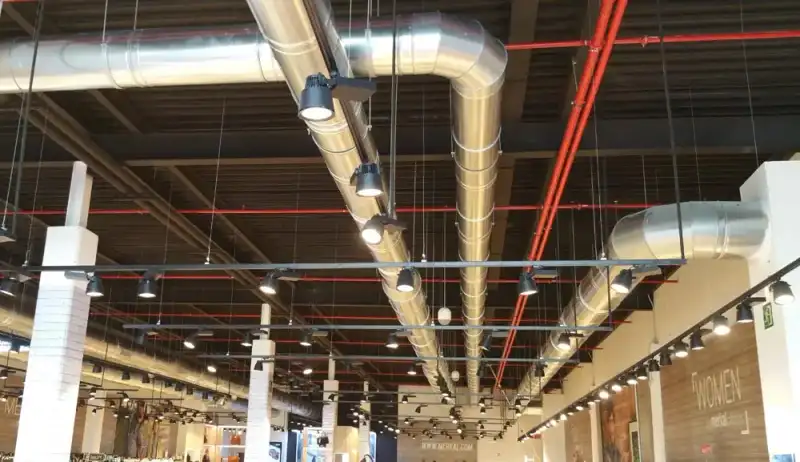
Zone control directs climate conditioning only where and when it is needed. Using duct systems and motorised dampers, each zone can be managed independently, avoiding energy waste in empty spaces or areas with different requirements.
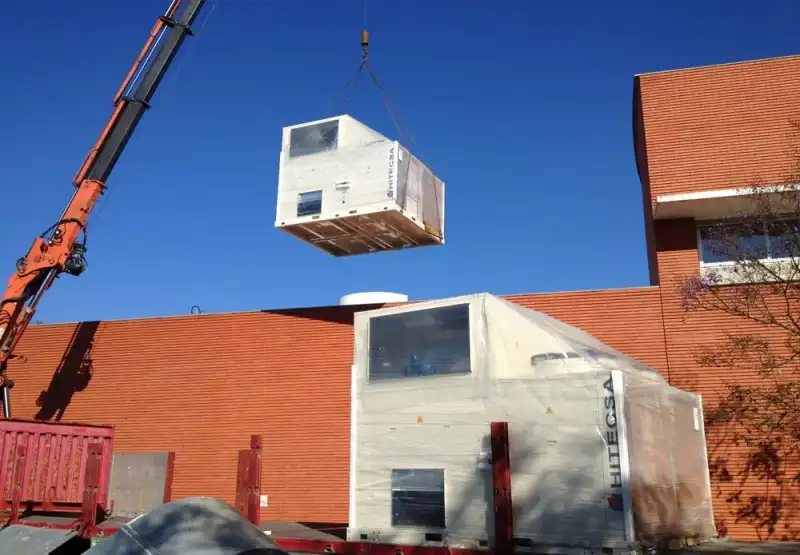
4. Replacing outdated equipment
HVAC equipment has improved dramatically in efficiency over the past decade. A unit that is more than 10 to 12 years old likely uses refrigerants that are being phased out and performs far below current standards.
Inverter systems, for example, adjust compressor speed to match actual demand instead of cycling on and off. This delivers savings of 25% to 40% compared with conventional equipment.
In addition, European regulations are progressively eliminating refrigerants with a high global warming potential, making upgrades to older installations inevitable.
5. Building insulation and airtightness
There is no point investing in the best HVAC equipment if the building has thermal leaks through poorly sealed windows, doors that are constantly opened, or insufficient insulation in the roof and facade.
Before sizing any installation, it is essential to assess the building envelope. Small improvements such as door draught strips, solar film on glazing or air curtains at high-traffic entrances make a significant difference in energy consumption.
RITE compliance as an opportunity
The RITE is not merely a legal obligation. Its requirements for minimum efficiency, maintenance and documentation are effectively a roadmap for reducing costs. Full compliance means having a properly sized, well-maintained and monitored installation.
At Acoval we design, install and maintain commercial HVAC systems across the Valencia region. If you want to assess the condition of your system or plan an upgrade, contact our technical team for a no-obligation assessment.