The pharmaceutical industry is arguably the sector where refrigeration has the most direct consequences for public health. A medicine stored outside its prescribed temperature range can lose efficacy, generate toxic degradation products or simply fail to work when a patient needs it. There is no margin for error.
Good Distribution Practice (GDP) and Good Manufacturing Practice (GMP) guidelines set specific and demanding requirements for the pharmaceutical cold chain that go well beyond what is expected in other industrial sectors. This article covers the fundamental technical aspects that every pharmaceutical business should understand and apply.
Temperature ranges in the pharmaceutical sector
The pharmacopoeia and regulatory guidelines establish standard temperature ranges for pharmaceutical product storage:
- Controlled room temperature (15 degrees C to 25 degrees C): the majority of common-use medicines.
- Refrigerated (2 degrees C to 8 degrees C): vaccines, insulins, biological products, certain eye drops and antibiotics.
- Frozen (-20 degrees C to -10 degrees C): some blood derivatives, laboratory reagents and specific products.
- Ultra-frozen (-70 degrees C to -80 degrees C): highly specialised products such as certain mRNA vaccines.
The critical point is not simply maintaining the temperature within range — it is guaranteeing that it never deviates from it, even for a few minutes, and being able to demonstrate this through documented records.
Regulatory framework
Good Distribution Practice (GDP)
The EU guidelines on GDP (2013/C 343/01) require companies that store and distribute pharmaceutical products to:
- Provide premises and equipment capable of guaranteeing the storage conditions declared by the manufacturer.
- Carry out a thermal mapping of storage areas to identify zones with the highest risk of temperature deviation.
- Install continuous temperature monitoring systems with data logging and alarms.
- Establish written procedures for managing temperature excursions.
- Validate and periodically calibrate measurement equipment and refrigeration systems.
Good Manufacturing Practice (GMP)
For pharmaceutical production facilities, GMP guidelines (Eudralex Volume 4, Annex 15) additionally require the qualification of HVAC and refrigeration equipment:
- DQ (Design Qualification): verify that the system design meets user requirements.
- IQ (Installation Qualification): confirm that equipment has been installed according to specifications.
- OQ (Operational Qualification): verify that equipment operates correctly across all operating ranges.
- PQ (Performance Qualification): demonstrate that equipment maintains required conditions consistently over a representative period.
Purpose-built refrigeration systems
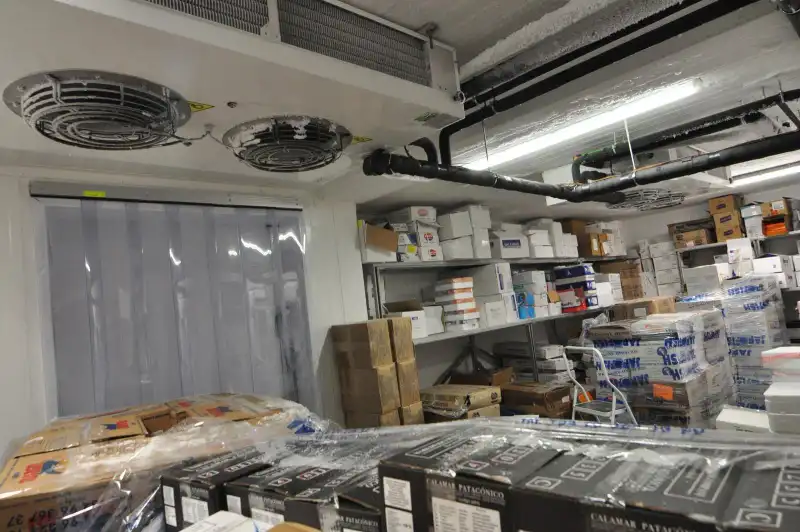
Pharmaceutical cold rooms (2-8 degrees C)
Cold rooms for pharmaceutical refrigerated storage differ from food-industry cold rooms in several important ways:
- Temperature uniformity: the difference between the coldest and warmest points in the chamber should not exceed 2-3 degrees C. This demands careful air distribution design, oversized evaporators and controlled air velocities.
- Freeze protection: many pharmaceutical products suffer irreversible damage if frozen. The system must incorporate safeguards against over-cooling, including controlled defrost heaters and minimum temperature limits in the controller.
- Redundancy: the cold room must have a redundant refrigeration system (N+1) that activates automatically if the primary system fails.
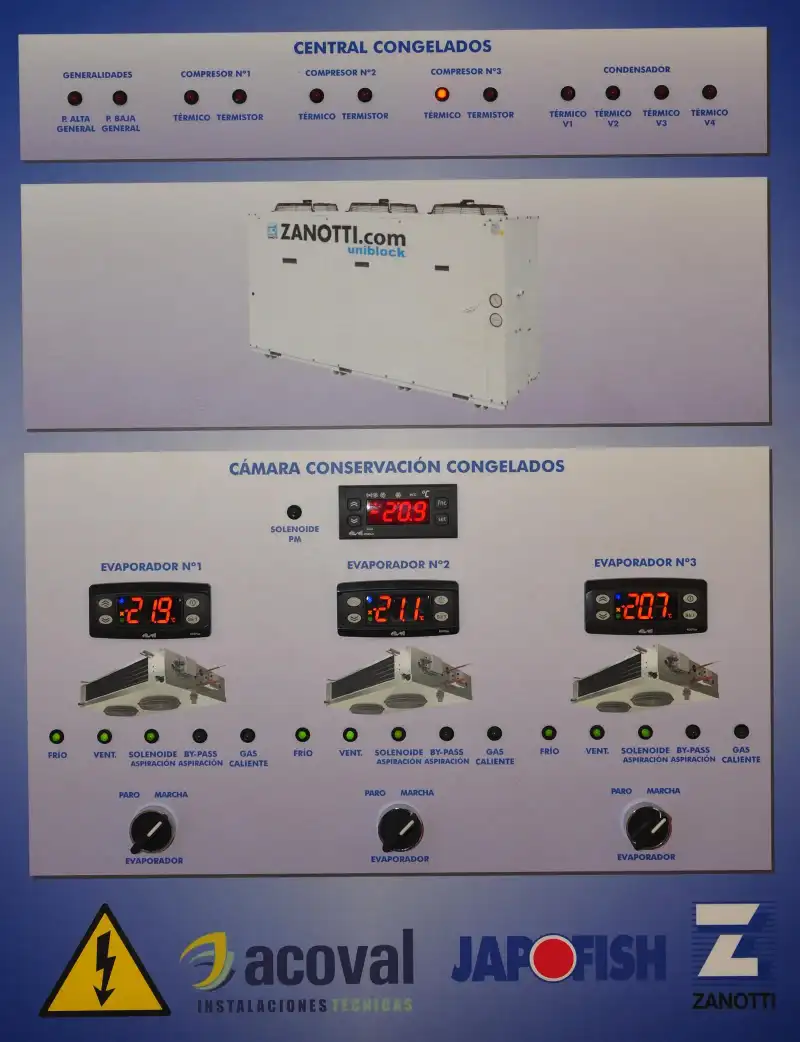
- 24/7 alarms and monitoring: calibrated temperature sensors with remote alerting (SMS, email, phone call) that notify the responsible person in the event of a deviation, including nights, weekends and public holidays.
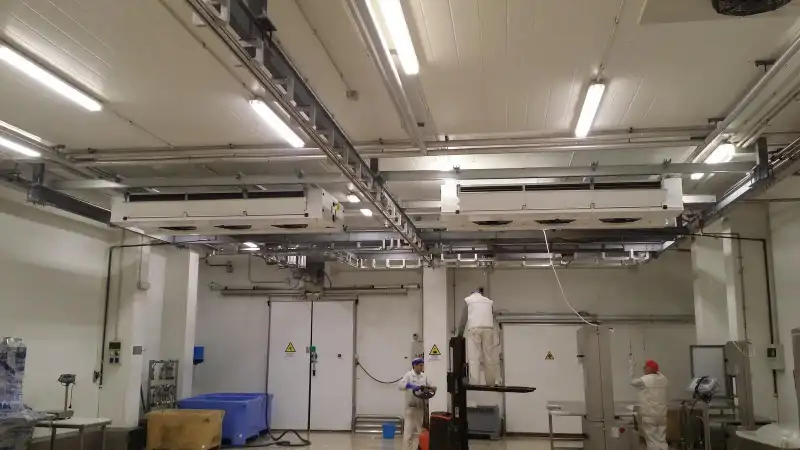
Clean room and production area climate control
Pharmaceutical production areas require HVAC systems that simultaneously control:
- Temperature: typically 20-22 degrees C with a tolerance of plus or minus 2 degrees C.
- Relative humidity: usually 45-55%, critical for the stability of many active ingredients and to prevent electrostatic charge build-up.
- Differential pressure: clean rooms maintain positive pressure relative to the exterior and a pressure cascade between zones of different classification.
- HEPA filtration: high-efficiency filters (H13 or H14) that guarantee the particle classification of the clean room.
HVAC systems for clean rooms are high-specification Air Handling Units (AHUs) with precise control of all these parameters and the reliability demanded by pharmaceutical production.
Refrigerated transport and logistics
The pharmaceutical cold chain does not end at the warehouse. Transporting products between facilities, to hospitals or pharmacies requires vehicles with validated refrigeration equipment and temperature monitoring throughout the journey. GDP guidelines require continuous temperature recording for the entire trip and documentation of any deviation.
Thermal mapping: what it is and why it is mandatory
Thermal mapping involves placing multiple calibrated temperature sensors at different points in a warehouse or cold room for a representative period (typically 72 hours in summer and 72 hours in winter) in order to:
- Identify the hot spots and cold spots in the space.
- Verify that the entire usable volume remains within the required temperature range.
- Determine the optimal location for permanent monitoring sensors.
- Assess the impact of routine operations (door openings, loading and unloading) on temperature.
The mapping must be repeated when the warehouse layout changes, when refrigeration equipment is replaced or when there are significant changes in stored load.
Continuous monitoring and alarm management
Temperature monitoring systems in pharmaceutical environments must meet specific requirements:
- Calibrated sensors: calibration must be traceable to national or international standards and must be repeated at the established frequency (typically annual).
- Continuous recording: temperature data must be logged at a minimum frequency (usually every 5-15 minutes) and retained for the period required by regulations.
- Escalating alarms: if the temperature deviates from range, the system must generate an immediate alert to the responsible person. If there is no response within a defined time, the alarm must escalate to a second level.
- Data integrity: records must be tamper-proof (audit trail), complying with GMP data integrity requirements.
Critical maintenance
In the pharmaceutical sector, refrigeration system maintenance is not a discretionary activity — it is a regulatory requirement. The maintenance plan must include:
- Periodic refrigeration equipment reviews at a minimum quarterly frequency.
- Temperature sensor calibration according to the established programme.
- Verification that alarms and backup systems function correctly.
- Periodic testing of emergency systems (backup generator, UPS).
- Complete documentation of all interventions.
A refrigeration failure that causes the loss of a batch of biological medicines can result in losses of hundreds of thousands of euros, in addition to the regulatory and reputational consequences.
At Acoval Technical Installations we design, install and maintain industrial refrigeration systems for the pharmaceutical and healthcare sectors in Valencia and the Valencian Community, with the technical and documentary rigour this sector demands. If you need a refrigeration system that complies with GDP and GMP, or want to audit your current installation, get in touch through our contact page.