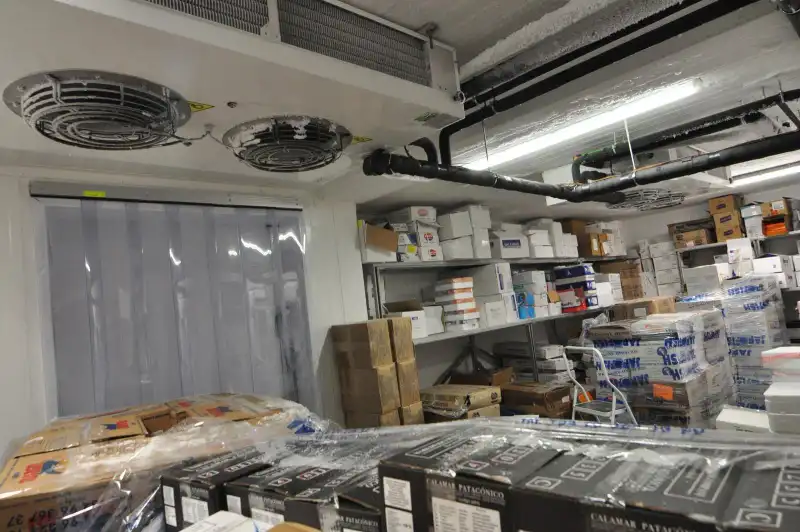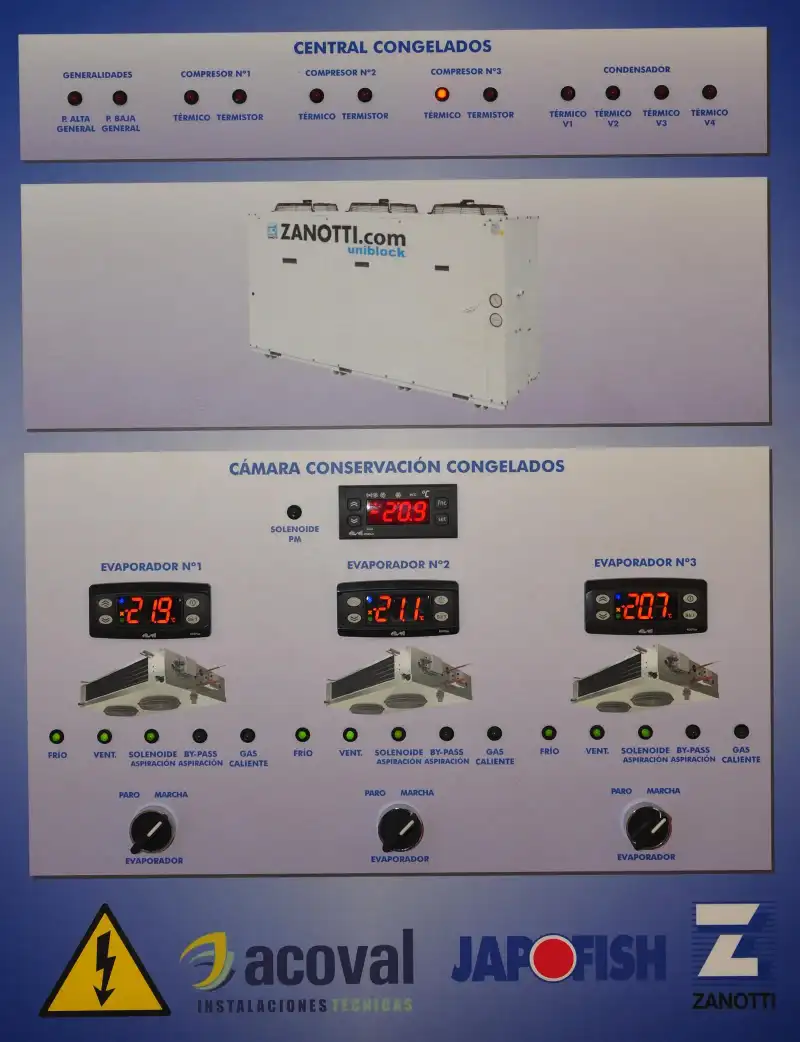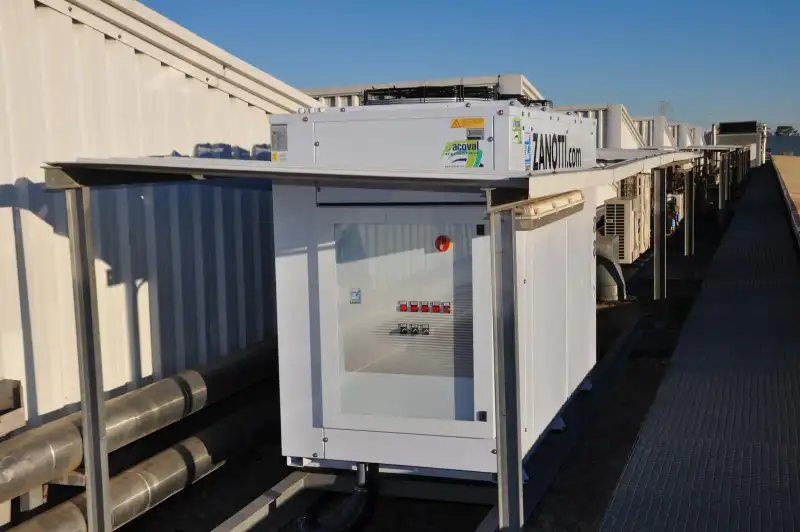
A cold room is much more than a cold space. It is a technical installation that must maintain stable temperature and humidity conditions with precision, comply with food safety and industrial regulations, and do so efficiently for 20 to 25 years. The decisions made during the design and construction phase determine everything that follows.
This guide compiles the essential technical information on storage temperatures, construction materials, refrigeration equipment and applicable regulations. It is a reference for professionals in the food industry, hospitality, logistics and any sector that works with products requiring a cold chain.
Storage temperatures by product type
Storage temperature is the most critical parameter of a cold room. Food safety regulations (EC Regulation 852/2004 and 853/2004) and sector codes of practice establish the ranges summarised below:
Positive temperature (chilled storage)
| Product | Storage temperature | Relative humidity |
|---|---|---|
| Fresh meat (beef, pork, lamb) | 0 C to +2 C | 85-90% |
| Fresh poultry | 0 C to +2 C | 85-90% |
| Fresh fish and seafood | -1 C to +2 C | 90-95% |
| Dairy and mature cheese | +4 C to +8 C | 80-85% |
| Fresh cheese | +2 C to +4 C | 85-90% |
| Cured meats | +8 C to +12 C | 70-75% |
| Pome fruit (apple, pear) | 0 C to +2 C | 90-95% |
| Tropical fruit (banana, mango) | +8 C to +13 C | 85-90% |
| Citrus fruit | +4 C to +8 C | 85-90% |
| Vegetables | +2 C to +6 C | 90-95% |
| Fresh eggs | +4 C to +8 C | 70-80% |
| Chilled ready meals | 0 C to +4 C | — |
Negative temperature (frozen storage)
| Product | Storage temperature |
|---|---|
| Frozen meat | -18 C or below |
| Frozen fish | -18 C or below |
| Ice cream | -18 C to -25 C |
| Quick-frozen vegetables | -18 C or below |
| Frozen bread and dough | -18 C or below |
| General frozen products | -18 C (legal minimum) |
| Blast freezing tunnels | -30 C to -40 C |
The -18 C threshold is the legal minimum for frozen products in the European Union. In practice, many installations operate at -20 C or -22 C to provide a safety margin against fluctuations.
Construction materials
Sandwich panels: the room envelope
Sandwich panels are the standard material for cold room construction. They consist of two steel sheets (galvanised or coated) with an insulating core between them.
Insulating core types:
| Insulating material | Thermal conductivity | Density | Fire performance | Typical use |
|---|---|---|---|---|
| Injected polyurethane (PUR) | 0.022-0.028 W/(m.K) | 38-42 kg/m3 | B-s2,d0 (with treatment) | Most common |
| Polyisocyanurate (PIR) | 0.022-0.025 W/(m.K) | 38-45 kg/m3 | B-s1,d0 (better fire reaction) | Rooms with fire safety requirements |
| Rock wool | 0.035-0.040 W/(m.K) | 100-150 kg/m3 | A1 (non-combustible) | Required in certain specific applications |
Recommended panel thicknesses:
| Room temperature | Recommended panel thickness |
|---|---|
| +2 C to +8 C | 60-80 mm |
| 0 C to +2 C | 80-100 mm |
| -18 C to -22 C | 120-150 mm |
| -25 C to -30 C | 150-200 mm |
| -35 C to -40 C | 200-250 mm |
Panel thickness directly affects heat losses through the envelope and, consequently, the installation’s energy consumption over its entire lifespan. A thicker panel has a higher initial cost but generates continuous savings on electricity.
Cold room floor
The floor is a critical element, especially in negative-temperature rooms. It must support the weight of stored goods (racking, pallets, forklift trucks) and prevent cold transmission to the ground.
Floor components in negative-temperature rooms:
- Reinforced concrete base.
- Vapour barrier (polyethylene membrane).
- Thermal insulation (extruded polystyrene XPS with high compressive strength).
- Electric resistance or heating circuit to prevent ice formation beneath the slab (in rooms built on natural ground).
- Wearing course (polished concrete or epoxy resin).
In positive-temperature rooms, the anti-freeze heater is not necessary, but floor insulation remains important for energy efficiency.
Doors
Cold room doors are the weakest point of the envelope from a thermal standpoint. Each opening allows a massive ingress of warm, humid air.
Door types:
- Manual hinged doors: for rooms with moderate use. Sealed with magnetic or rubber gaskets.
- Sliding doors: for large rooms or those with intensive forklift traffic. Can be manual or automatic.
- Rapid doors: high-speed roll-up doors that minimise opening time. Installed alongside the main insulated door in rooms with high access frequency.
- PVC strip curtains: additional protection against warm air ingress. They do not replace the door but significantly reduce infiltration.
Refrigeration equipment
Evaporators
The evaporator is the heat exchanger installed inside the cold room. Its selection must consider:
- Cooling capacity: matched to the room’s heat load.
- Air throw: the evaporator must distribute air evenly throughout the room without creating strong air currents that dry out the product.
- Fin spacing: in negative-temperature rooms, evaporator fins must have wider spacing (8-12 mm) to delay frost build-up and reduce defrost frequency.
Defrost systems
In negative-temperature rooms, the evaporator accumulates frost that progressively reduces its performance. The most common defrost methods are:
- Electric defrost: electric heating elements integrated into the evaporator. The most common method in freezer rooms.
- Hot gas defrost: the refrigeration cycle is temporarily reversed to send hot gas to the evaporator. More energy-efficient but more complex.
- Air defrost: only viable in positive-temperature rooms, where the air temperature alone is sufficient to melt the frost.
Applicable regulations
RSIF (Refrigeration Plant Safety Regulation)
Royal Decree 552/2019 sets the safety conditions for refrigeration installations. The most relevant aspects for cold rooms are:
- Refrigerant classification and charge limits according to premises type and the refrigerant’s toxicity/flammability.
- Installation by a qualified refrigeration company registered with the relevant authority.
- Installation certificate and mandatory technical documentation.
- Safety devices: equipment safety relief valve, internal door release (mandatory in all cold rooms), trapped-person alarm in freezer rooms.
Food safety
- EC Regulation 852/2004 and 853/2004: food hygiene and specific rules for products of animal origin.
- HACCP: every food operator must implement a Hazard Analysis and Critical Control Points system that includes cold room temperature monitoring and logging.
- Traceability: continuous temperature recording with calibrated probes and alarm system.
Fire safety
- CTE DB-SI: the Technical Building Code sets fire reaction requirements for internal lining materials. PIR-core and rock-wool panels meet the most demanding requirements.
- Fire protection installations: depending on the size and use of the establishment, detection, alarm and automatic suppression systems may be required.
Sizing criteria
Cold room size is determined by:
- Stored product volume (kg or pallets) and planned turnover.
- Storage density: typical values are 250-350 kg/m3 for hanging meat, 500-600 kg/m3 for palletised product and 350-450 kg/m3 for loose fruit and vegetables.
- Circulation space for air flow, access aisles and forklift manoeuvring.
- Future expansion margin: building 15-20% more than strictly necessary is more cost-effective than extending the room once built.
Design as a long-term investment
A well-designed cold room, with the right insulation, the appropriate equipment and a professional maintenance plan, operates reliably and efficiently for more than 20 years. The decisions made at the outset — panel thickness, compressor type, door quality — determine operating costs for the entire lifespan.
At Acoval, we design, build and install cold rooms and industrial refrigeration systems for food, hospitality, logistics and distribution businesses in Valencia and the Valencian Community. If you need a new cold room or want to assess the condition of an existing one, contact us and we will advise you at no obligation.