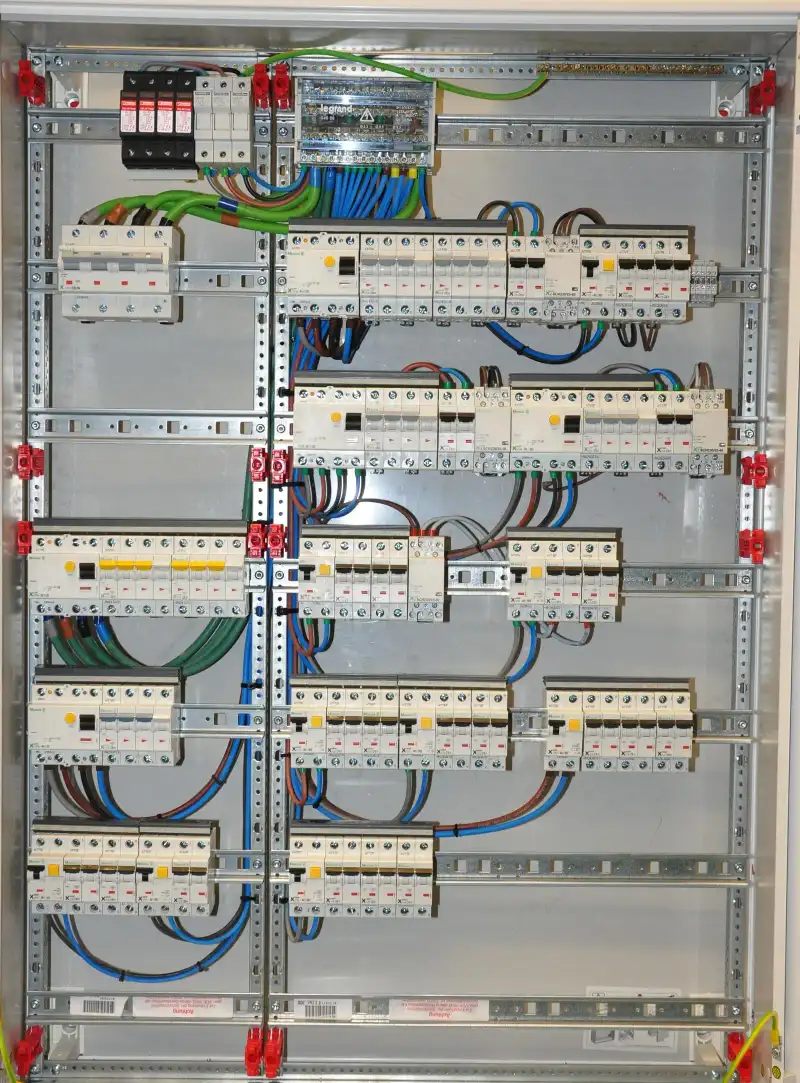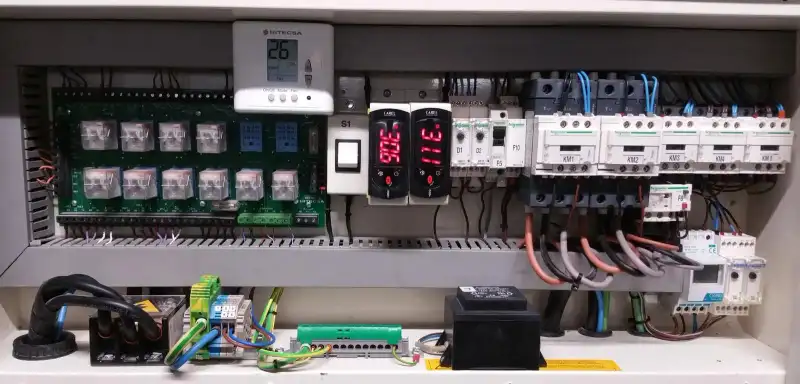
Electrical fires account for between 20% and 30% of all industrial incidents in Spain. The most concerning fact is that the vast majority of these fires are preventable: they result from poorly maintained installations, deteriorated connections, undetected overloads or the absence of adequate protection systems.
Fire protection in industrial electrical installations is not a single measure but a combination of correct design, appropriate materials, detection systems, properly rated electrical protections and a rigorous maintenance programme. This article covers the essential aspects that every industrial business should understand and put into practice.
Main causes of electrical fires
Before discussing protection, it is worth understanding the most common causes:
- Circuit overload: when the current flowing through a conductor exceeds its rated capacity on a sustained basis, the insulation degrades from heat and can lead to a short circuit or ignition of nearby materials.
- Short circuit: direct contact between conductors of different phases or between phase and neutral. It generates very high currents and temperatures that can instantly ignite insulation or nearby combustible materials.
- Electric arc: occurs at loose connections, poorly tightened terminals or deteriorated contacts. An arc generates temperatures of several thousand degrees and can ignite any material in its vicinity.
- Earth leakage currents: when conductor insulation is degraded, current can flow along unintended paths, causing localised heating at unexpected points.
- Overvoltage: lightning strikes or switching operations on the grid can cause voltage surges that puncture insulation and trigger short circuits.
Applicable regulations
REBT and its technical instructions
Spain’s Low Voltage Electrotechnical Regulation (REBT, Royal Decree 842/2002) sets the core safety requirements for electrical installations. The technical instructions most relevant to fire protection are:
- ITC-BT-29: installations in premises at risk of fire or explosion. It classifies locations by risk level and sets specific requirements for electrical equipment and cable routing in each zone.
- ITC-BT-22: protection against overcurrent.
- ITC-BT-23: protection against overvoltage.
- ITC-BT-28: installations in places of public assembly.
These instructions form the regulatory backbone for electrical fire safety and have equivalents or parallels in most European countries through the IEC 60364 series.
RSCIEI — Industrial Fire Safety Regulation
Royal Decree 2267/2004 (RSCIEI) establishes fire protection requirements for industrial premises, including compartmentation, evacuation routes, detection and suppression systems, and the conditions for electrical installations under each risk category.
CTE DB-SI — Building Code fire safety section
For non-industrial buildings with commercial or tertiary use, the Fire Safety section (DB-SI) of Spain’s Technical Building Code (CTE) supplements the above with additional protection requirements.
Electrical protection systems against fire
Overcurrent protection
Correctly rated circuit breakers (MCBs) are the first line of defence against overloads and short circuits. For effective protection, it is essential that:
- Each breaker’s rating matches the cross-section of the cable it protects.
- Selectivity between protections is verified: when a fault occurs on a branch circuit, the nearest protection device must trip first, not the main breaker.
- The breaking capacity is adequate for the prospective short-circuit current at the point of installation.
Residual-current devices (RCDs)
RCDs detect earth leakage currents and disconnect the circuit before the leakage can cause heating or arcing. The standard 30 mA sensitivity protects people against electric shock. In industrial installations, 300 mA RCDs supplement fire protection by detecting larger leakage currents that, while not dangerous by contact, can generate enough heat to start a fire.
Arc fault detection devices (AFDDs)
Arc fault detection devices are a relatively recent technology that identifies the characteristic electrical signatures of series and parallel arcs and disconnects the circuit before the arc can cause a fire. Their use is recommended by standard UNE-HD 60364-4-42 and is especially relevant in installations with ageing wiring or in environments with combustible materials.
Surge protection devices (SPDs)
SPDs protect the installation against transient overvoltages from lightning or switching events. They are mandatory in installations at risk of fire under ITC-BT-23.
Design and construction measures
Materials and cable management
In premises at risk of fire, regulations require:
- Cables with flame-retardant insulation and low smoke emission (CPR classification Cca or higher).
- Metal or non-combustible cable trays and conduits.
- Enclosures with an IP rating appropriate to the hazard level of the location.
- Cable glands and wall penetrations that preserve fire compartmentation integrity.
Compartmentation
Cable trays and conduits that cross fire compartment boundaries must be sealed with fire-stopping materials (intumescent sealants, fire pillows, intumescent collars) to maintain the fire resistance of the wall or floor slab. An installation with unsealed penetrations can allow a localised fire to spread throughout an entire building within minutes.
Circuit separation
Safety circuits — emergency lighting, fire detection and suppression systems — must be physically separated from general circuits and protected with fire-resistant cables to ensure they remain operational for the time required to complete evacuation.
Detection and alarm systems
A correctly designed electrical installation dramatically reduces the probability of fire but does not eliminate it entirely. Early detection systems are an indispensable complement:
- Smoke detectors: the most common in clean industrial environments.
- Heat detectors: suitable for areas with dust, fumes or steam where smoke detectors would produce false alarms.
- Flame detectors: for high-risk areas with rapidly combustible materials.
- Fire alarm panel: receives signals from all detectors, manages alarms and can activate automatic suppression systems.
Preventive maintenance as a fire prevention strategy
The most effective tool for preventing electrical fires is a rigorous preventive maintenance programme that includes:
- Annual thermographic inspection of switchboards, terminals and power connections. Thermography detects hot spots long before they develop into a failure.
- Periodic insulation resistance testing with a megohmmeter, especially in installations over 10 years old.
- Retightening of terminals and connections in switchboards at least once a year.
- Verification of protection device operation (RCDs, MCBs, surge protectors).
- Inspection of cable routes and conduits: mechanical damage, crushing, exposure to chemicals or solar radiation.
Act before the fire, not after
Electrical fire protection is not an expense — it is an investment that safeguards lives, business continuity and company assets. A fire in an industrial facility can mean total destruction of the premises, months of lost production and, in the worst case, irreversible harm to people.
At Acoval Technical Installations we design, install and maintain industrial electrical systems with a strong focus on safety and regulatory compliance. We carry out thermographic inspections, protection verification and electrical installation audits in Valencia and the surrounding region. If you want to know the real condition of your installation, get in touch through our contact page and we will propose a no-obligation assessment.