Refrigeration circuit cleaning is one of the least well-known yet most important maintenance interventions for industrial and commercial refrigeration systems. While cleaning filters and condensers is routine, internal contamination of the circuit — degraded oil, moisture, solid particles, acids — goes unnoticed until it causes costly breakdowns or accelerated compressor wear.
This article explains when refrigeration circuit cleaning is necessary, what the most frequent causes of contamination are, how the process is carried out and what concrete benefits it delivers.
Why does the inside of a refrigeration circuit become contaminated?
A refrigeration circuit in good condition essentially contains refrigerant and lubricating oil. Any substance other than these two is a potential source of problems.
The most frequent causes of contamination are:
- Compressor failure: when a compressor fails due to mechanical wear or electrical burnout, it releases metallic particles, carbon and degraded oil that spread throughout the circuit via the refrigerant.
- Moisture: if humid air enters the circuit during repairs or recharges, the water reacts with the oil and refrigerant to form acids and sludge. Even small amounts of moisture can degrade the oil and attack compressor components.
- Mixing incompatible oils: switching oil types without carrying out proper cleaning can cause gel formation or precipitates that block capillary tubes and expansion valves.
- Refrigerant replacement without prior cleaning: when the refrigerant type is changed (for example, phasing out R-22 and replacing it with an HFO or HFC refrigerant), residual incompatible oil from the previous system triggers reactions that damage the system.
- Progressive oil degradation: over the years, the oil degrades from thermal and mechanical cycling. Wear particles and degradation by-products accumulate in the circuit.
Signs that the circuit needs cleaning
A contaminated circuit does not always give immediate obvious signs. Over time, however, symptoms appear that an experienced technician can identify:
- Abnormal operating pressures: if high and low pressures are not as expected for the operating conditions, there may be partial blockages or expansion valve issues.
- Elevated discharge temperature: the compressor is running at higher than normal temperatures, a sign that something is preventing proper heat exchange or that the oil has lost lubricating capacity.
- Increased electricity consumption with no apparent change in refrigeration demand: the system is working harder to achieve the same cooling.
- Oil with a dark, cloudy appearance or a burnt smell when a sample is taken from the sight glass or filter drier.
- Filter drier with activated moisture indicator (yellow sight glass): a clear sign of moisture in the circuit.
- Residue build-up in the filter: if metallic particles, sludge or abnormal discolouration are observed when replacing the filter drier, the circuit is contaminated.
- Recurring failures in expansion valves, solenoids or the compressor itself.
The refrigeration circuit cleaning process
Refrigeration circuit cleaning is a specialised operation that requires specific equipment and qualified personnel certified under the RSIF (Spain’s Refrigeration Safety Regulation). It is not simply a matter of changing the filter and oil: the process involves physically removing contaminants from inside the pipes, heat exchangers and components.
Prior assessment
Before starting the clean, the technician carries out a diagnostic assessment of the circuit’s condition: pressure and temperature readings, oil analysis if possible, inspection of the filter drier and review of the breakdown history. This assessment determines the level of contamination and the most appropriate cleaning protocol.
Refrigerant recovery
The refrigerant is recovered in its entirety using an approved recovery machine. It must not be released into the atmosphere: HFC and HFO refrigerants are greenhouse gases, and the RSIF and EU Regulation 517/2014 impose severe penalties for releasing these gases.
Circuit cleaning
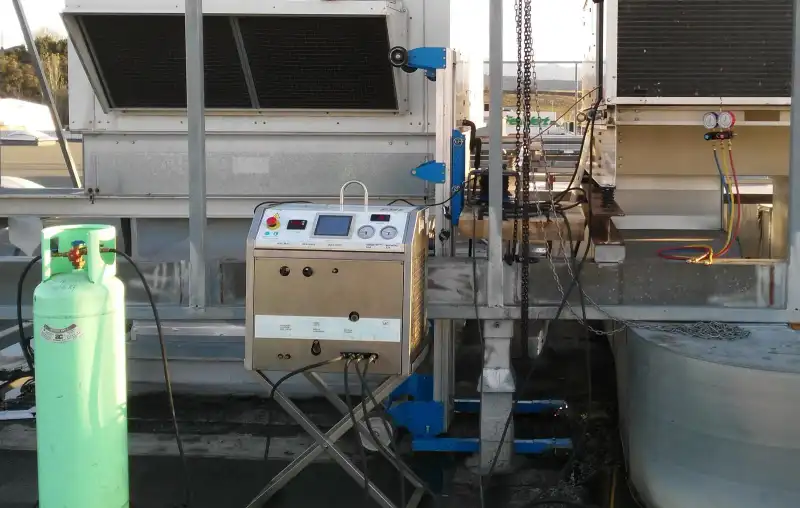
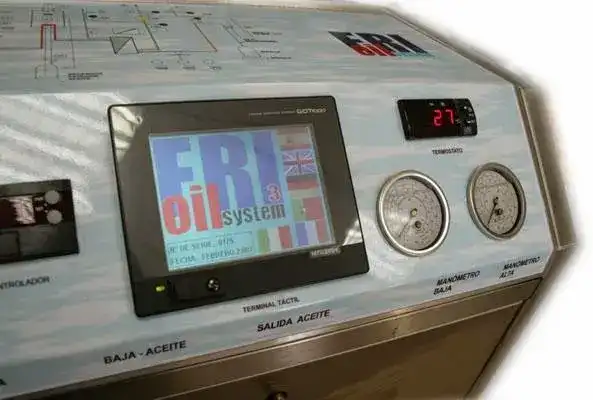
Cleaning fluids specifically formulated for refrigeration circuits are used, compatible with the system’s materials (copper, aluminium, steel, elastomers). The cleaning agent is introduced into the circuit and circulated using a pump, carrying contaminants to a capture filter.
In heavily contaminated installations or those with debris from a failed compressor, it may be necessary to dismantle certain pipe sections for mechanical cleaning and to replace components such as the expansion valve or sight glass/filter drier that have been damaged.
Evacuation and drying
After cleaning, the circuit is evacuated with a vacuum pump to a pressure below 200 microns, which ensures the removal of all residual moisture. This phase is just as important as the chemical cleaning: any moisture left in the circuit would be the source of new problems.
Recharge and commissioning
Once the process is complete, the circuit is recharged with the correct refrigerant (the exact amount, no more and no less), operation is verified with all parameters within correct ranges and the entire process is documented in the installation’s logbook.
Concrete benefits of a proper cleaning
The return on investment in refrigeration circuit cleaning materialises in several ways:
Greater efficiency and lower consumption
A clean circuit transfers heat efficiently. With oil in good condition and no deposits on the heat exchangers, the compressor operates at the correct pressures and consumption returns to design values. In heavily contaminated installations, the efficiency improvement after cleaning can be 15-25%.
Extended compressor lifespan
The compressor is the most expensive component in any refrigeration installation. The leading cause of premature compressor failure is poor lubrication due to degraded or contaminated oil. Cleaning the circuit after a compressor failure, or as a preventive measure in older installations, is the best guarantee that the new compressor will achieve the manufacturer’s expected service life.
Reliability and fewer unplanned stoppages
A contaminated installation is one that tends to cause frequent problems: expansion valve blockages, solenoid failures, compressor breakdowns. Cleaning the circuit eliminates the root cause of many of these recurring faults.
Regulatory compliance
The RSIF establishes that refrigeration installations must be maintained in safe and correct operating condition. A contaminated circuit operating outside its design parameters may be considered a breach of this obligation, with the consequences that entails in the event of an inspection or incident.
How often should the circuit be cleaned?
There is no universal fixed frequency, as it depends on the age of the installation, the type of refrigerant and oil, operating conditions and breakdown history. As a general guide:
- Whenever a failed compressor is replaced, especially if the failure was mechanical or electrical.
- When changing the refrigerant type in an existing installation.
- In installations more than 10-15 years old that have never received a circuit cleaning.
- When oil analysis or filter drier inspection reveals contamination.
- When the installation shows symptoms described in the section above.
In the Valencian Community, where many commercial and industrial refrigeration installations have been running for decades on basic maintenance, circuit cleaning is an intervention that an increasing number of businesses are incorporating into their maintenance plans.
To learn how we carry out this service and what it includes, visit our refrigeration circuit cleaning page where you will find full information about the process and the equipment we use.
Conclusion: prevention is far cheaper than repair
Cleaning a refrigeration circuit has a relatively low cost compared with replacing a compressor, repairing an evaporator or facing an unplanned shutdown in the middle of the summer season. It is, in essence, a preventive maintenance measure that protects the investment made in the refrigeration installation.
If you have a refrigeration installation showing the symptoms described in this article, or if you simply cannot remember the last time a circuit cleaning was carried out, contact us and our technical team will diagnose the condition of your installation and recommend the most appropriate intervention.