Every year, thousands of industrial and commercial businesses in Spain pay higher energy bills than necessary. Not because their equipment is inadequate or because the energy market is unfavourable, but because nobody has analysed in detail how, where and when they consume energy.
The energy audit is precisely that analytical tool. It is not a routine inspection or a standard installation review. It is a systematic study that allows you to identify inefficiency points with precision, quantify the savings potential and prioritise investments with the highest return.
What is an energy audit?
An industrial energy audit is a process of gathering and analysing information about a company’s or facility’s energy consumption, with the objective of:
- Understanding the real consumption profile: what is consumed, when, where and in which processes.
- Identifying inefficiencies: oversized equipment, processes with avoidable losses, poorly regulated installations, heat recovery opportunities.
- Proposing improvement measures: ranked by required investment, potential savings and payback period.
- Establishing a baseline: that allows the real impact of implemented improvements to be measured.
The result is a detailed technical report that serves both as an internal management tool and as supporting documentation for applying for financing or claiming tax incentives linked to energy efficiency.
When is it mandatory: Royal Decree 56/2016
Spanish Royal Decree 56/2016, which transposes the EU Energy Efficiency Directive (2012/27/EU), establishes the obligation to carry out energy audits for large companies and for corporate groups that collectively exceed the large-company thresholds.
A company is classified as large if, in the preceding year, it employed more than 250 people or had an annual turnover exceeding EUR 50 million and an annual balance sheet total exceeding EUR 43 million.
The specific obligations are:
- Carry out an energy audit covering all centres with significant consumption, including buildings, industrial processes and transport.
- Complete it before 14 November of the year in which the large-company status is reached and repeat it every four years.
- Submit the audit to the competent regional authority (for companies with centres in the Valencian Community, IVACE — the Valencian Institute for Business Competitiveness — is the receiving body).
Non-compliance is classified as a serious infringement and can carry penalties of between EUR 6,001 and EUR 60,000, in addition to the obligation to remedy the breach.
For companies that do not reach these thresholds, the audit is not mandatory but is highly recommended, especially when the energy bill represents a significant proportion of operating costs.
What a complete energy audit includes
An audit compliant with RD 56/2016 and the UNE-EN 16247 standard — the quality benchmark for this type of study — includes the following phases:
1. Data collection and preliminary analysis
Consumption information for the past 12 to 24 months is gathered: electricity bills, gas consumption, diesel or other fuel data, production or activity data for calculating energy intensity indicators.
2. Site visit and technical inspection
The audit team visits the facilities to inventory the energy-consuming equipment (HVAC, lighting, motors, compressors, furnaces, production processes), verify their condition and operating parameters and take on-site measurements when necessary.
3. Analysis and modelling
Using the data collected, the energy balance of the installation is constructed: how consumption is distributed across different uses and equipment. Inefficiencies are identified and improvement opportunities are quantified.
4. Proposed measures
Each saving measure is presented with:
- Technical description of the action.
- Estimated investment.
- Annual energy and financial savings.
- Investment payback period.
- Associated CO2 emission reduction.
5. Report and presentation of results
The final report must meet the formal requirements of RD 56/2016 to be valid for legal purposes. Its contents are the exclusive property of the audited company.
Areas of analysis in a typical industrial facility
HVAC and ventilation
These are often the largest consumers in offices, distribution centres and service companies. The most frequent opportunities include: oversized equipment, ventilation systems without variable air volume control, lack of zoning, absence of heat recovery.
Industrial refrigeration systems
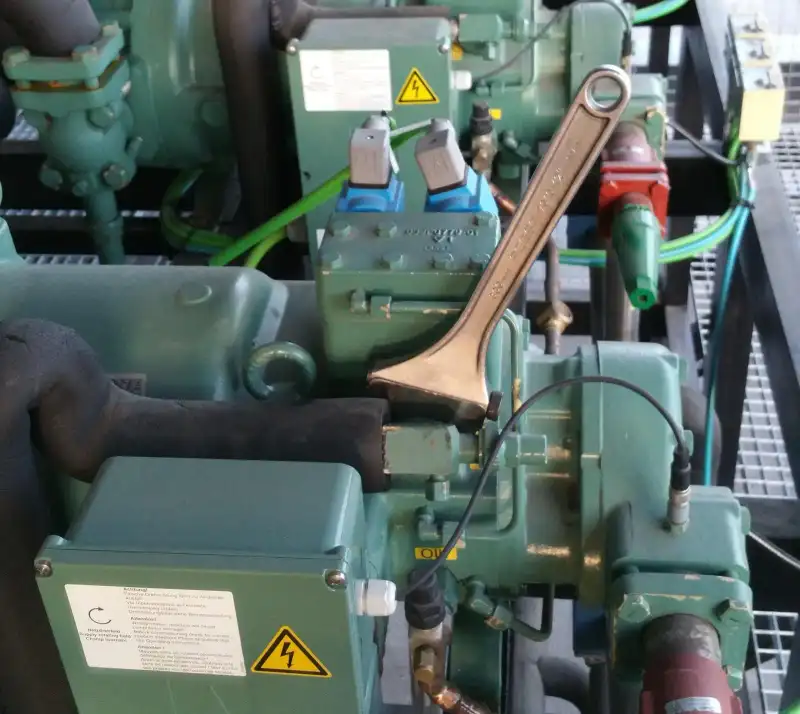
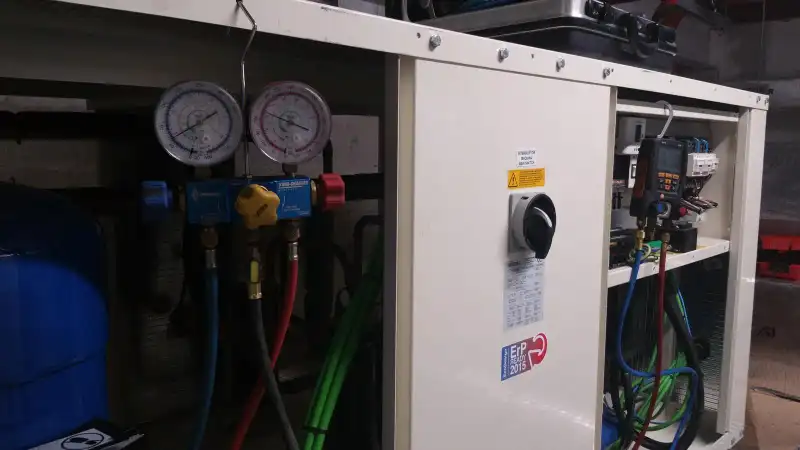
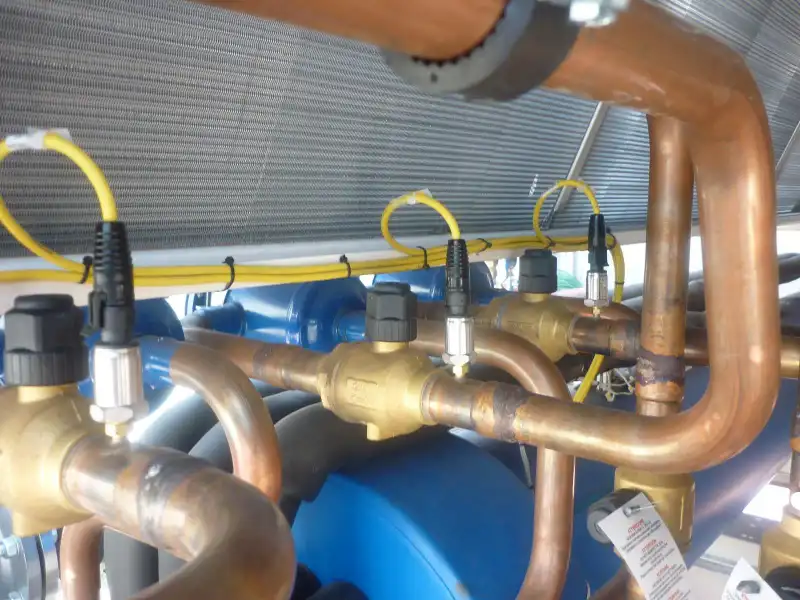
In the food industry or temperature-controlled logistics, refrigeration is often the primary consumer. Potential savings typically lie in setpoint optimisation, improved condenser and evaporator maintenance and recovery of condensation heat.
Lighting
Replacing fluorescent or metal halide lighting with LED, combined with presence detection and dimming controls, can deliver consumption reductions of 50% to 75% in this category.
Motors and drives
Electric motors account for more than 60% of industrial electricity consumption globally. Installing variable frequency drives on pumps, fans and compressors, or replacing IE1 efficiency class motors with IE3 or IE4, are measures with payback periods typically under 3 years.
Compressed air
Compressed air systems are notoriously inefficient. Leaks, excessive operating pressure and obsolete equipment can mean that more than 30% of the compressor’s energy is wasted. A dedicated compressed air audit usually identifies very significant savings.
Building thermal envelope
Insulating roofs, facades and floors, improving the airtightness of openings and installing solar shading are structural measures that permanently reduce heating and cooling demand.
Typical results and ROI
Results depend on each company’s starting point, but in industrial facilities without prior energy management the following are common:
- Overall energy saving: between 10% and 30% of current consumption.
- Annual financial saving: variable, but in companies with energy bills of EUR 100,000/year or more, identified savings typically exceed EUR 15,000-25,000/year.
- Payback period on the audit investment: usually less than 6 months, given that the audit cost is small compared with the savings identified.
- Payback period on improvement measures: between 1 and 7 years, with an average of 3-4 years for the recommended package of measures.
Illustrative example
A manufacturing company in the Aldaia industrial area with an annual energy bill of EUR 180,000 carried out an energy audit that identified the following main measures:
| Measure | Investment | Annual saving | Payback |
|---|---|---|---|
| Variable frequency drives on ventilation motors | EUR 12,000 | EUR 4,800/year | 2.5 years |
| Industrial lighting replacement with LED | EUR 18,000 | EUR 7,200/year | 2.5 years |
| Refrigeration rack optimisation | EUR 8,500 | EUR 5,100/year | 1.7 years |
| Ventilation heat recovery | EUR 22,000 | EUR 6,600/year | 3.3 years |
| Total | EUR 60,500 | EUR 23,700/year | 2.6 years |
The cumulative saving over 5 years exceeds EUR 118,000, against a total investment of EUR 60,500. The associated CO2 emission reduction is approximately 45 tonnes per year.
How to choose an energy auditor
The energy audit for large companies must be carried out by a competent technician, which in practice means an engineer or other professional with the appropriate technical competences and demonstrable sector experience.
It is advisable that the auditor holds a recognised energy auditor certification (such as from AENOR or equivalent) and works according to the UNE-EN 16247 standard methodology.
In any case, the auditor must be independent of equipment suppliers to guarantee the objectivity of the recommendations. An audit carried out by the manufacturer of the equipment that will subsequently be sold does not offer the necessary guarantees of impartiality.
The next step after the audit
An audit has no value if it is not followed by action. The report identifies opportunities and prioritises them, but the real improvement comes with implementation. For this it is important to have a technical team that can accompany the execution of improvement measures, verify the actual savings achieved and update the plan based on results.
At Acoval we offer maintenance and technical installation diagnostic services with a clear focus on energy efficiency. We support industrial and commercial businesses in analysing their installations, identifying improvements and carrying out the recommended actions.
If your company is approaching the RD 56/2016 thresholds, if you already have the obligation to carry out the audit or if you simply want to know how much you could save, write to us through our contact page. We explain the process, the timelines and the costs with no obligation whatsoever.