Wine is a living product. Its compounds evolve over time, and that evolution can head in the right direction — towards complexity and maturity — or in the wrong direction, towards degradation, depending largely on the conditions in which it is stored. Temperature and humidity are the two most critical environmental factors and, at the same time, the easiest to control with the right technology.
This technical guide is aimed at both professional wineries looking to optimise their facilities and private cellar owners or collectors who want to ensure their investment in wine is properly protected.
Why temperature is the most critical factor
The optimal range: between 12 and 14 C
The ideal temperature for wine conservation and ageing lies between 12 and 14 C. At these temperatures, the chemical reactions involved in wine ageing proceed slowly and in a controlled manner, allowing tannins to integrate, secondary and tertiary aromas to develop and the wine to reach its full expressive potential.
Above 18-20 C, the ageing process accelerates in an unbalanced way: fruity aromas are lost rapidly, alcohols partially evaporate and the wine can acquire cooked or flat notes. Below 8 C, the process slows too much and can interfere with tartrate crystal formation in wines not cold-stabilised.
The real enemy: temperature fluctuations
Just as important as the temperature range is its stability. Sudden variations cause the wine to expand and contract inside the bottle, accelerating air passage through the cork and triggering premature oxidation. A maximum variation of plus or minus 1-2 C over the course of a day is considered acceptable, with no more than 5-6 C variation between seasons.
A cellar that maintains 12 C in summer and 16 C in winter is infinitely better than one that swings between 10 C and 22 C throughout the year, even if the average is similar.
Ranges by wine type
Not all wines have the same requirements:
- Red wines for ageing (crianza and reserva): 13-15 C
- White and rose wines: 10-12 C
- Sparkling wines and champagnes: 8-10 C
- Dessert and fortified wines: 14-16 C (more tolerant of slightly higher temperatures)
If the cellar holds different types of wine, the most conservative approach is to design for white and sparkling wines, as they are the most sensitive.
Relative humidity: the cork’s ally
The optimal range: between 60% and 80% RH
The optimal relative humidity in a wine cellar lies between 60% and 80%. This humidity serves an essential function: keeping the cork flexible and airtight.
Cork is the most widely used closure system for quality wines, and its proper function depends on it being slightly moist. A dry cork contracts and loses elasticity, allowing air into the bottle. Adequate humidity ensures a perfect seal throughout the wine’s storage life.
In addition, keeping bottles on their sides (essential for cork-sealed wines) ensures the liquid stays in contact with the cork, keeping it moist from the inside. But ambient humidity is equally important for protecting the exposed ends of corks from the air.
Consequences of incorrect humidity
- Humidity below 50%: Corks dry out, shrink and the wine begins to lose volume through evaporation. The bottle may show a low fill level, a sign that air has entered.
- Humidity above 85%: Mould proliferation on labels and capsules. Mould does not directly affect the wine inside a sealed bottle, but it deteriorates presentation and can attack corks over time. It also creates unhealthy conditions in working cellars.
How control failures affect wine
Premature oxidation
This is the most common and most serious consequence. Oxygen converts the wine’s polyphenolic compounds, alters its colour (reds acquire orange tones, whites turn excessively golden) and destroys primary fruity aromas. An oxidised wine is irreversible: there is no way to recover it.
Cork taint
Although the TCA (trichloroanisole) that produces cork taint has a microbial rather than environmental origin, poorly managed humidity conditions that encourage mould on corks can increase the incidence of this defect.
Gas loss in sparkling wines
Sparkling wines are especially sensitive to temperature variations and vibrations. Poor thermal control in a cellar storing cava or champagne can cause accelerated loss of effervescence and premature ageing.
Equipment needed for a climate-controlled cellar
Cellar-specific climate control units
Conventional HVAC equipment is not suitable for wine cellars because it is designed to dry the air (reducing humidity) and to reach human comfort temperatures (20-22 C), not the cool temperatures that wine requires.
Specialist cellar climate units — from manufacturers such as Eurocave, Breezair, Stulz or similar — are designed to:
- Maintain temperatures in the 8-16 C range with precision.
- Humidify or dehumidify as needed to stay within the 60-80% RH band.
- Operate with low noise and vibration levels (vibrations damage the sediment in wines undergoing ageing).
- Run efficiently at low evaporating temperatures.
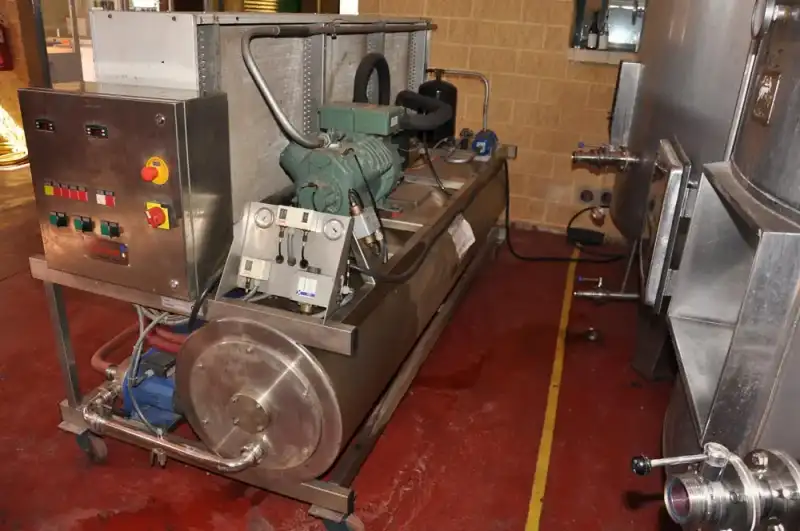
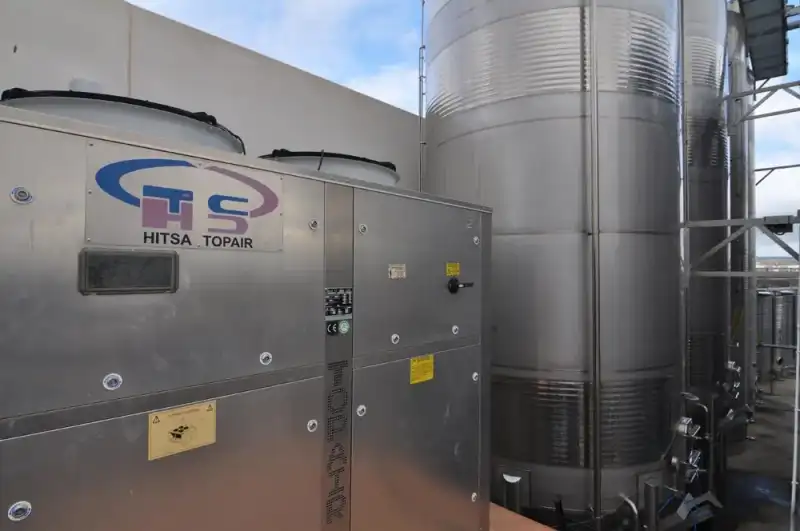
For smaller cellars, standalone climate-controlled cabinets are a compact solution that integrates all control elements. For larger cellars, a dedicated refrigeration installation with a split or compact unit designed for the wine conservation temperature range is required.
Monitoring and alarm systems
In a cellar of any significant value, installing temperature and humidity sensors with continuous logging and remote alerts is not a luxury: it is a necessity. Current systems allow:
- Historical logging of temperature and humidity to detect trends and problems before they cause damage.
- SMS or email alerts when values fall outside the programmed range.
- Remote access to view the cellar’s status from anywhere.
- Integration with building management systems (BMS) in industrial wineries.
In the Valencian Community, where summers can be particularly hot, an HVAC equipment failure in August can ruin a wine collection in a matter of hours. An alarm system is the first line of defence against that risk.
Thermal insulation of the cellar
No climate control system can compensate for poor insulation efficiently. Before sizing the equipment, it is essential to assess:
- Thickness and type of insulation in walls, ceiling and floor.
- Door and window airtightness: cellar doors must be hermetic, with perimeter seals in good condition.
- Elimination of thermal bridges: metal structures or uninsulated areas that transmit external heat.
A well-insulated cellar requires a lower-capacity unit, consumes less energy and maintains more stable conditions with less fluctuation.
Most common mistakes in wine cellar climate control
- Using a standard domestic split unit: Not designed for the required temperature range and dries the air excessively.
- Underestimating the thermal load: If insulation is poor or there are frequent visitors to the cellar, the equipment may be insufficient.
- Not installing monitoring: An equipment failure can go unnoticed for days or weeks.
- Placing the evaporator too close to the wine: The jet of cold air directly on bottles can cause localised temperature fluctuations.
- Not planning preventive maintenance: The climate unit’s filters must be cleaned regularly to avoid loss of efficiency and air quality issues.
Getting the design right from the start
Wine cellar climate control is a specialist technical project that requires a detailed preliminary analysis: area, height, existing insulation, number of bottles, wine types, cellar use (private, commercial, with visitor tours)… All these factors determine the equipment needed, its capacity and its configuration.
At Acoval we have experience in installing climate control and monitoring systems for wine cellars in Valencia and the Valencian Community. If you are planning to build or renovate a cellar, we can help you design an installation that protects your wine optimally and efficiently.
Get in touch through our contact page to discuss your project with no obligation.